

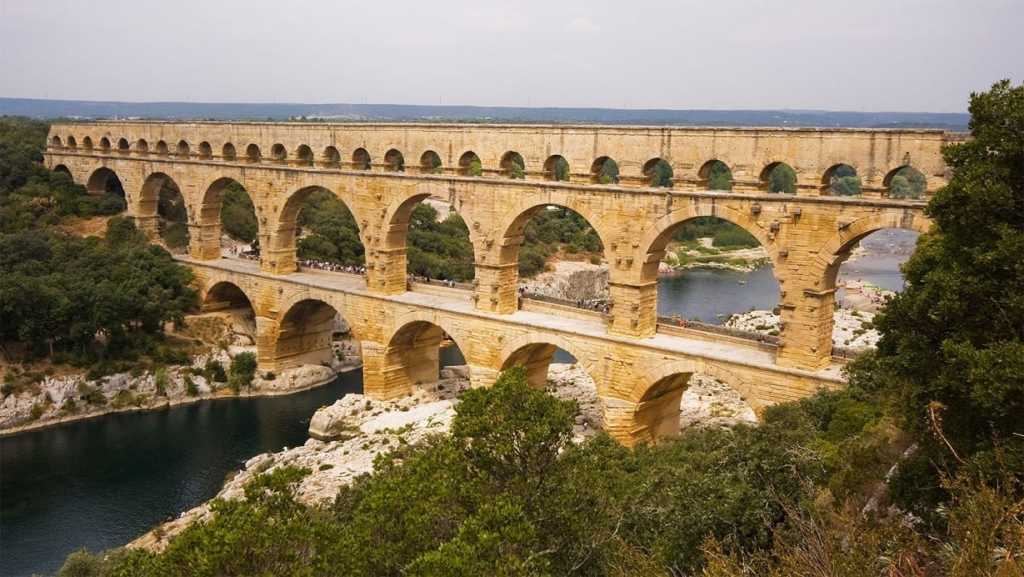

This charming and characterful village is truly the gateway to the Cévennes.
Anduze is located only about 10 kilometres from the campsite, making it perfect for a bike ride. In its many old streets and narrow alleys you’ll find delightful shops and the loveliest boutiques.
The weekly market on Thursday is highly recommended: you'll discover local products, the scents and colours of the region, and a wonderful Provençal atmosphere.


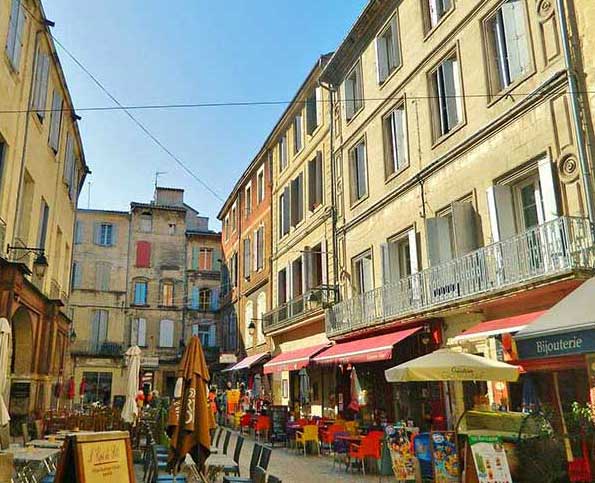
Sommières staat niet voor niets op de lijst van kleine karaktervolle steden. Sommières houdt zijn erfgoed in goede staat en zo kunnen we eindeloos genieten van de prachtige architectuur die de stad te bieden heeft. Het kasteel is gebouwd door de kasteelheren van Sauve en Anduze, deze stadjes geven je hetzelfde middeleeuwse gevoel. De stad Sommières met zijn gezellige centrum staat bekend om de brocante markt elke zaterdagochtend. In combinatie met de gewone markt die aan de brocante grenst, is dit een top uitje voor snuffelaars. Dit prachtige authentieke stadje is een bezoek meer dan waard!
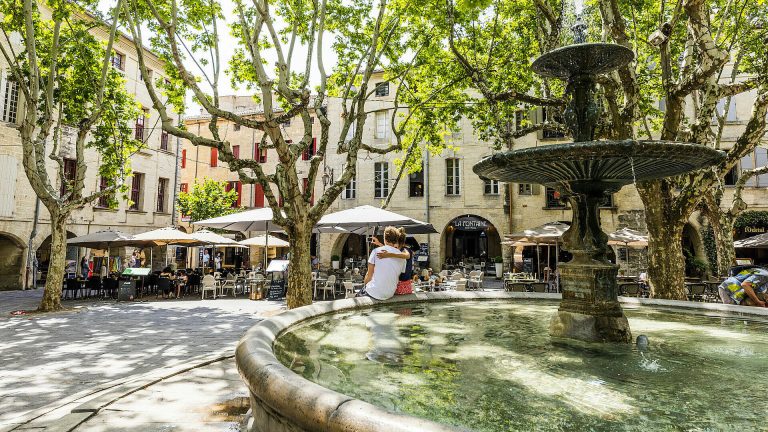
Uzés
Located just 32 km away, the beautiful village of Uzès is famous for its renowned market at Place d'Herbes every Saturday morning. It's perfect for local products like regional cheeses and olives. But Uzès also boasts a stunning historical heart: the well-preserved Duché d'Uzès (castle) and its beautiful medieval streets immediately give you that true "Provence" feeling. Quiet squares, arcades, and 17th-century facades make it an ideal place for a leisurely stroll.

For 2,000 years, the Pont du Gard has overlooked the winding Gardon River. At 49 metres high, it is the tallest ancient bridge in the world. The Pont du Gard is the only ancient bridge with three levels that is still standing today. The park surrounding the monument is ideal for leisurely walks and for admiring the remarkable condition of this immense aqueduct. Since 1985, the Pont du Gard has been listed as a UNESCO World Heritage Site, and since 2010 it has officially been designated a "Grand Site de France".

The Cévennes form a vast mountainous region and begin just 10 km from our location.
The landscape consists of mountains, forests, rivers, and deep valleys.
The region is renowned for its preserved nature and rich biodiversity.
You can discover picturesque villages with a rich heritage and local traditions.
It also offers peace, space, and breathtaking panoramas.
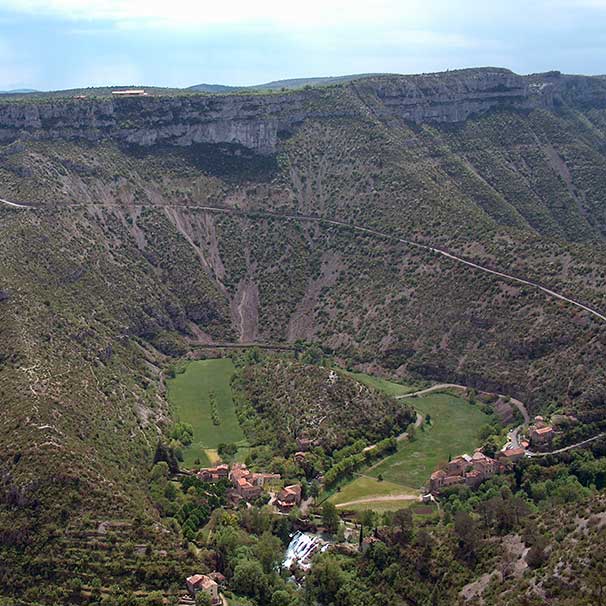
The largest cirque valley in France, formed by the meanders of the River "Vis", featuring a pyramid-shaped rock formation in the depths of the valley and the nearby village of Navacelles.
On the way from Camping Beau Rivage, you will encounter beautiful waterfalls with refreshing mountain water to cool off in.
The area around the Cirque de Navacelles is perfect for hiking.
The many monastery ruins and the rich variety of flora and fauna make this a fascinating region.
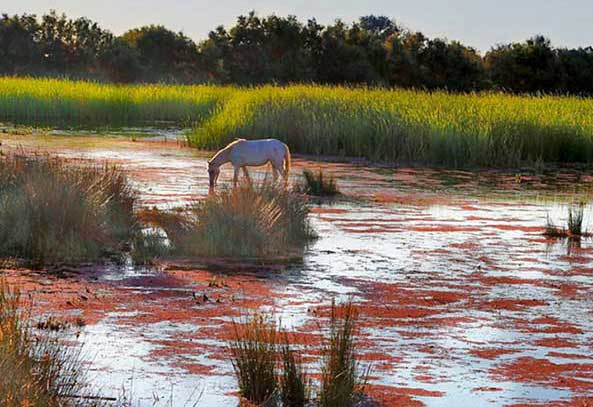
Approximately 75 km away lies the Camargue, with hundreds of saltwater lakes, pink flamingos, bulls and white horses.
It is an area rich in flora and fauna.
Perfect for a boat trip or a walk through the charming Camarguais villages and towns.
Such as Arles, known as the city where Vincent van Gogh once lived when he grew tired of busy Paris.
Or Aigues-Mortes, the walled town where you can wander through small streets and already spot many flamingos.
And many more beautiful places await discovery.

This southern French region lies next to Occitanie (the region where Camping Beau Rivage is located) and stretches between the Italian border and the Mediterranean Sea.
Provence is known for its varied landscapes, with endless lavender fields, rugged mountains, and picturesque villages.
Here you will find historic towns, local markets, and a rich Provençal culture.
Food and wine lovers will also find plenty to enjoy.
An ideal destination where nature, culture, and relaxation come together.
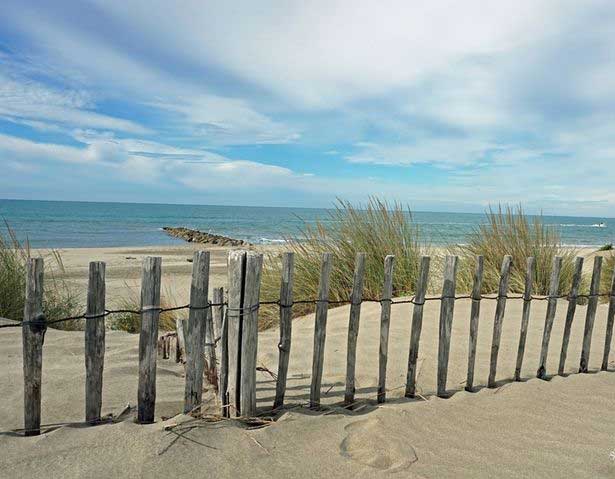
The mediterranean sea is about an hour’s drive from the campsite. With its beautiful long sandy beaches, as well as the small beaches of Grau du Roi or La Grande Motte.
A day spent sunbathing or playing in the waves is highly recommended!
Besides sun and sea, the coast also offers charming promenades, cozy cafés, and markets where you can discover local specialties.
A perfect spot for a relaxing day by the water, for young and old alike.
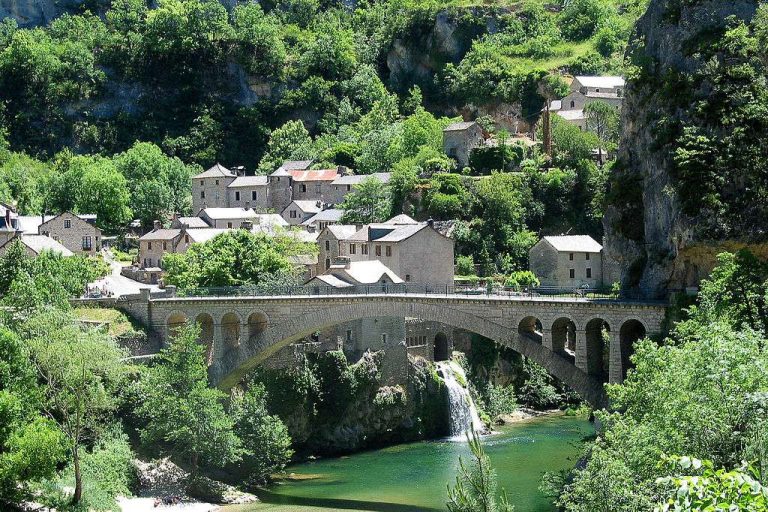
De Tarn
One of France’s most beautiful gorges, with high limestone cliffs, turquoise waters, and breathtaking viewpoints.
The Tarn combines rugged nature, authentic villages, and stunning vistas.
Visit medieval villages such as Castelbouc, Peyreleau, and Sainte-Enimie, one of the “Plus Beaux Villages de France”.
The Tarn is less crowded than Provence or Dordogne, but just as beautiful!
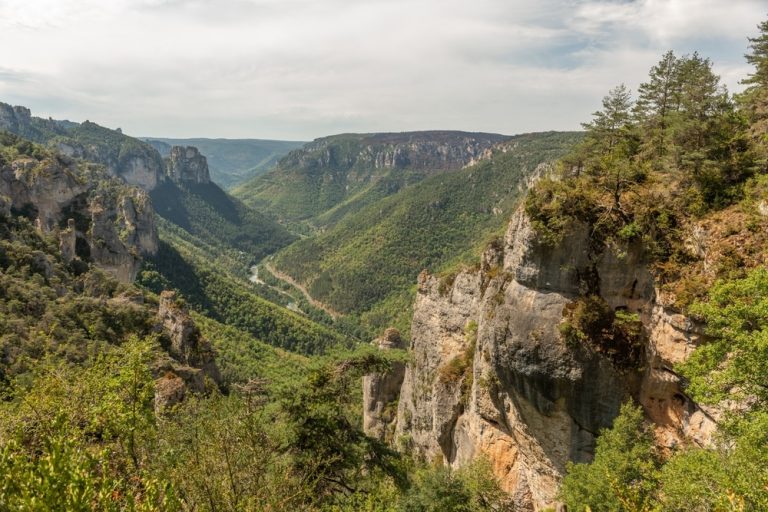
Lozère
Untamed nature and the least populated area of France, making it perfect for nature lovers and those seeking peace and quiet.
The landscape is highly diverse: from the high pastures of Aubrac and the peaks of Mont Lozère to the stunning Gorges du Tarn and Gorges de la Jonte.
Endless hiking opportunities: GR trails, dolmens, and herb-rich mountain meadows make it a paradise for hikers and nature enthusiasts.

Grotte des Demoiselles
At the Demoiselles caves, the tour begins in a kind of train carriage that takes you 30 meters high.
The impressive cave features stunning formations, most of which are covered with crystals, making many areas sparkle and shine.
The large hall, known as the “Cathedrale des Amibes,” is overwhelming and can be admired from multiple angles.
This cave is located about a 45-minute drive from the campsite.

Grotte de Cocalière
The Grotte de la Cocalière is considered one of the most beautiful caves in France.
The cave has a descent of 252 steps, but at the end you will discover a wealth of well-preserved treasures.
Explore the pearls, crystal reefs, and the prehistoric passage.
At the end of the tour, a small train takes you back to your car.

Grotte de Trabuc
The Grotte de Trabuc is also known as the cave of the 100,000 soldiers.
Water is present throughout the cave, making it the symbol of this living cave.
You descend in stages via staircases to a depth of approximately 100 meters.
The most beautiful formations can be seen in the different halls, each with its own attractions, such as the stunning azure lake, the 100,000 soldiers, and the stalagmites and stalactites that have been growing for centuries.
This cave is the closest to Camping Beau Rivage.

Grotte de la Salamandre
The Grotte de la Salamandre is one of the most beautiful caves in Europe. First opened to the public in 2013, it offers three ways to visit:
The Belvedere with its incredible panoramic view, wheelchair accessible (unique in Europe)
The Guided Tour, a fascinating one-hour journey into the heart of a vast chamber adorned with magnificent titanic formations highlighted with light and sound
For adrenaline lovers, the Grand Recall: a 50-meter descent to explore the huge chamber from above, with friends or family. Guaranteed shared excitement!
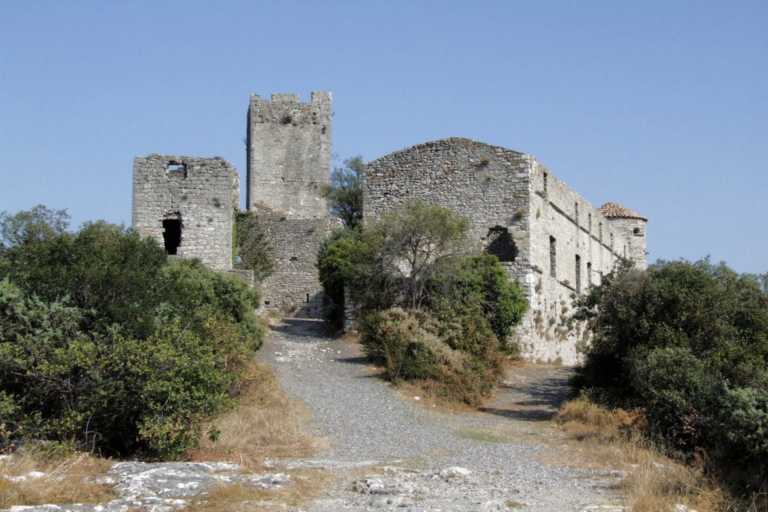
Just five minutes from Beau Rivage you will find this former fortress overlooking the Gardon and Anduze. It was built in the 12th century and later restored in the 17th century by Henri de La Fare.
In 1703 it was seized by the men of Jean Cavalier and later, in 1792, burned down by the revolutionaries, before being sold off in separate parts in 1793.
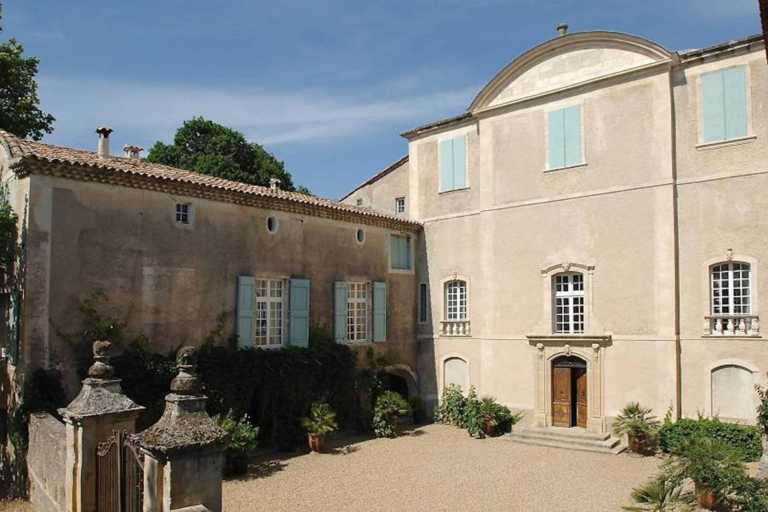
This family castle has stood for 700 years in the center of the village of Ribaute. It was built in the 13th century and transformed in the 18th century. Two corner towers have been preserved. The main entrance features a classical 18th-century façade. A monumental double-spiral staircase from 1771 serves the reception rooms above. The very beautiful rooms upstairs are furnished in period style, while the ground floor remains medieval. It is a “dressed” castle and lies in the village across from our river, so don’t hesitate to honour this 13th-century castle with a visit!
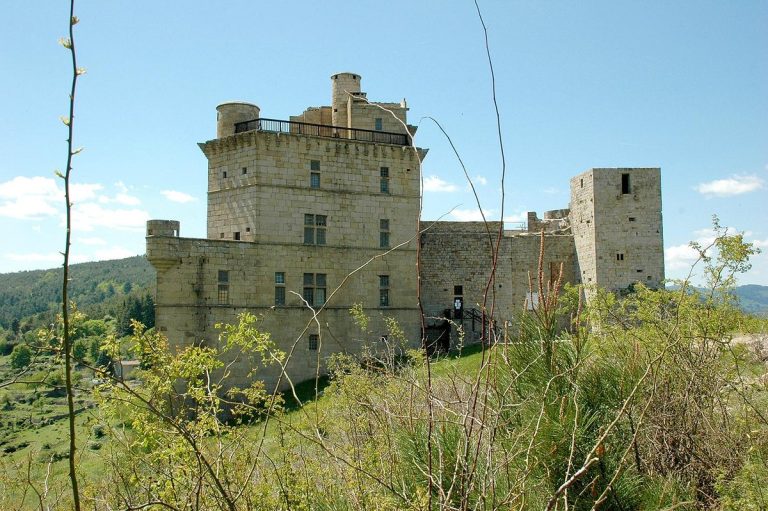
Nicknamed “the ship of the Cévennes” because of its spectacular stone prow and unique in Europe, the Château de Portes, listed as a historic monument, watches over the old Régordane path used by pilgrims from Saint-Gilles and by crusaders on their way to the Holy Land. A true gateway to the Hautes Cévennes at the foot of Mont Lozère, it lies on the edge of the Cévennes National Park and reflects over 1,000 years of history.
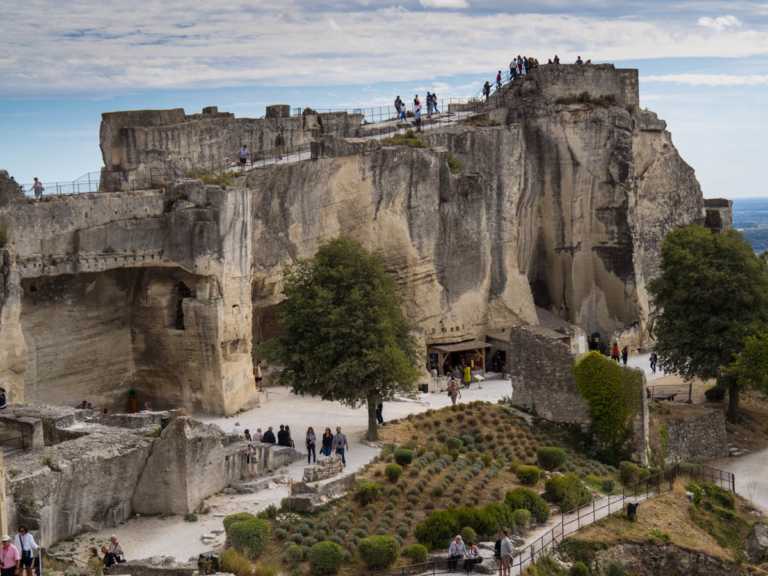
Château des Baux sits atop a rock overlooking the medieval village of Les Baux de Provence, offering an unparalleled panorama of the Alpilles.
Only ruins and remnants remain of the 11th-century fortress, along which visitors can walk a guided route marked with explanatory panels and orientation tables.
We discover the castle as it was in the Middle Ages: a coveted stronghold and the site of many attacks until its dismantling in 1632. A very interesting, enjoyable, and engaging castle, definitely worth the roughly one hour and fifteen minute drive and a visit.

The ancient Roman city of Nîmes is one of the best preserved cities from Roman times. The Arena has a history spanning many centuries. This masterpiece represents an exceptional achievement in engineering and architecture. Originally, France’s most famous Roman amphitheatre served as a place of entertainment. The city has many more remains from that era and is therefore well worth a visit.

The city of Arles is known for its ancient Roman buildings and sights. You can find an old theatre, an arena, a basilica and a monastery there. Walking through the historic city is easy, as the different highlights are close to each other. A visit to the Camargue is a great addition to your trip. If you drive from Arles to the coastal town of Saintes-Maries-de-la-Mer, you will see flamingos, white horses and black bulls!
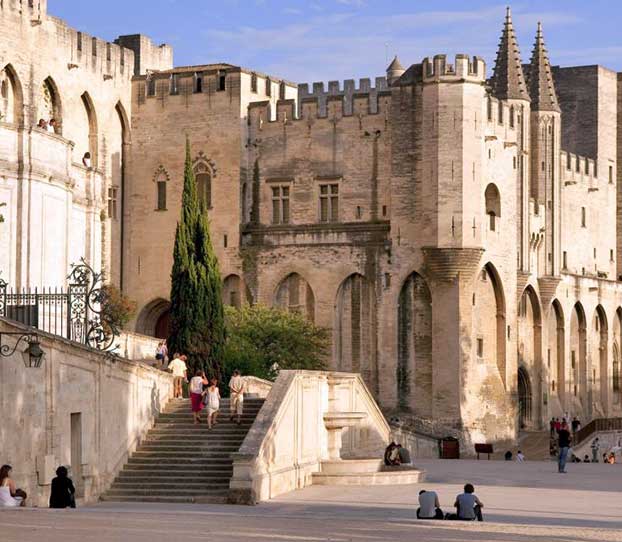
This beautiful city, with its city walls, winding streets and atmospheric squares, gives Avignon an almost fairytale-like appearance.
It is known for its half-finished bridge and the song Pont d’Avignon, but above all for the impressive Palais des Papes. This is a medieval palace-fortress that belongs to the most impressive historic buildings in Europe.
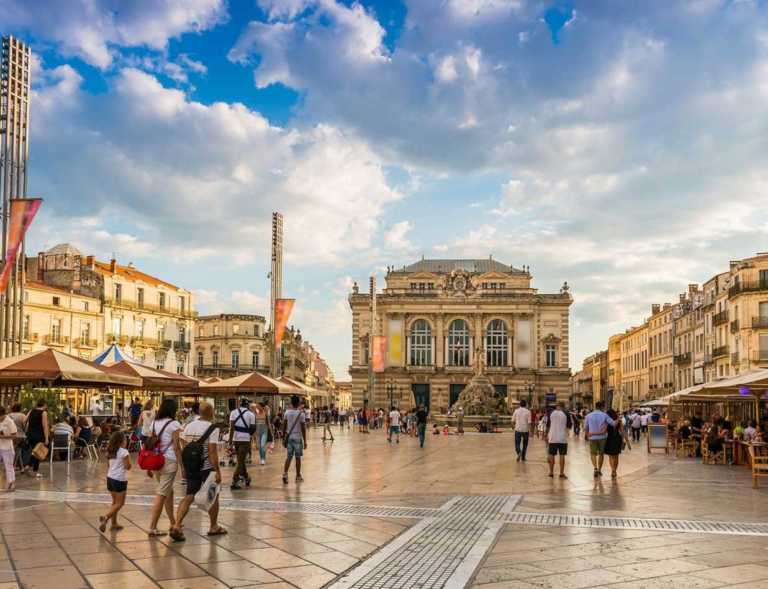
Montpellier is a beautiful Mediterranean city about 10 kilometres from the coast. The mix of modern and old makes the city especially appealing. In the typically narrow streets you can enjoy shopping and you will end up in the historic city centre. Montpellier is a real student city and keeps up with the times. Nowhere else in France do you see so many people on bicycles, so exploring the city by bike or Segway is a fun option.
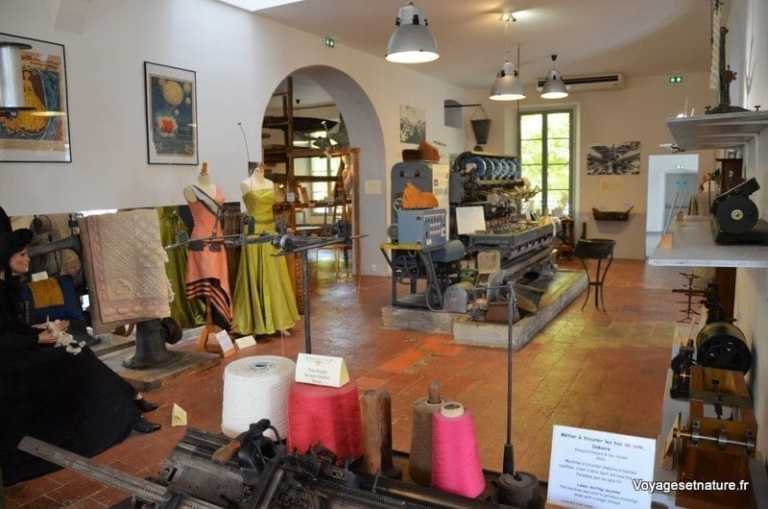
When you visit the museum, you go back to the time when the silk industry was still thriving and formed an essential part of the wealth of the Cévennes. In the Cévennes, you can see the region’s most valuable tree everywhere, the mulberry tree, on which the silkworms feed. The museum is located in Saint-Hippolyte-du-Fort.
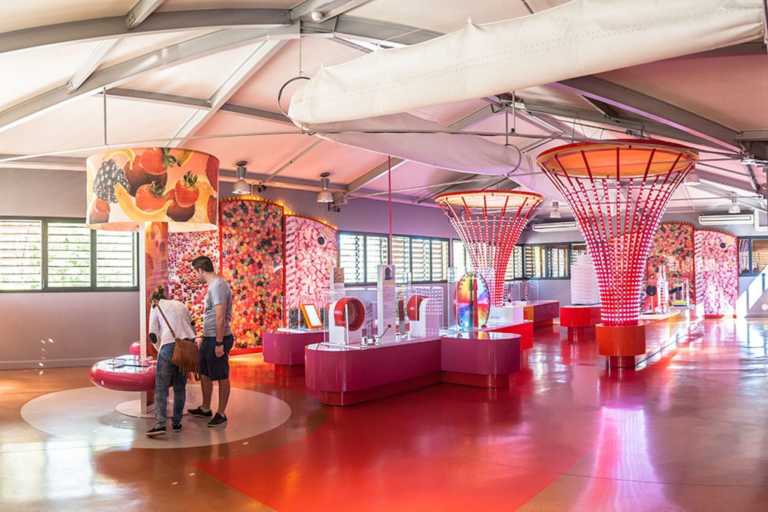
Musée du bonbon Haribo
Is there a more fun museum for children than one about candy? The Haribo Museum in Uzès shows how candy is made, what sweets used to be like, how marketing has changed over the years, and most importantly – how the candies taste today!
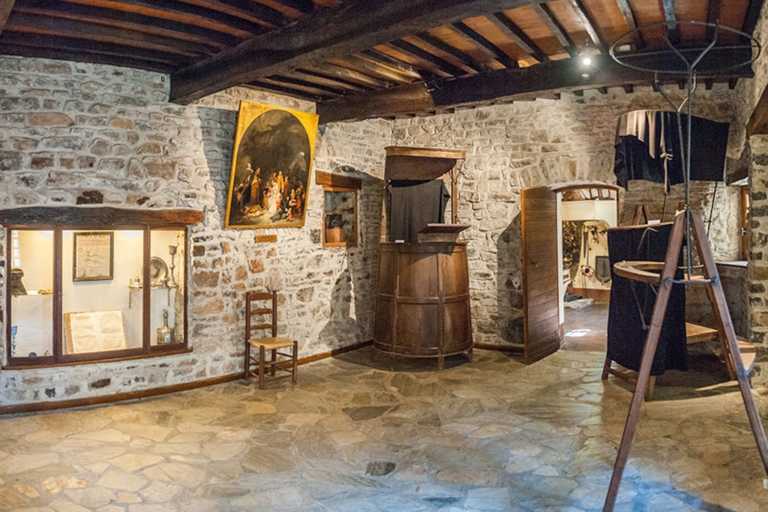
In the heart of the Cévennes hamlet of Mialet, you will find the Musée du Désert. In fifteen different rooms, you can explore the history of the Huguenots, the wars between faiths, and the daily life of people who had to go into hiding. Step back into a time that was so important for this region.

The Préhistorama in Rousson provides insight into the early times of life on Earth and shows its continuous evolution. The collection of 1,500 items illustrates everyday life in prehistoric times. To give a clear impression, the characters and animals are presented in life size.
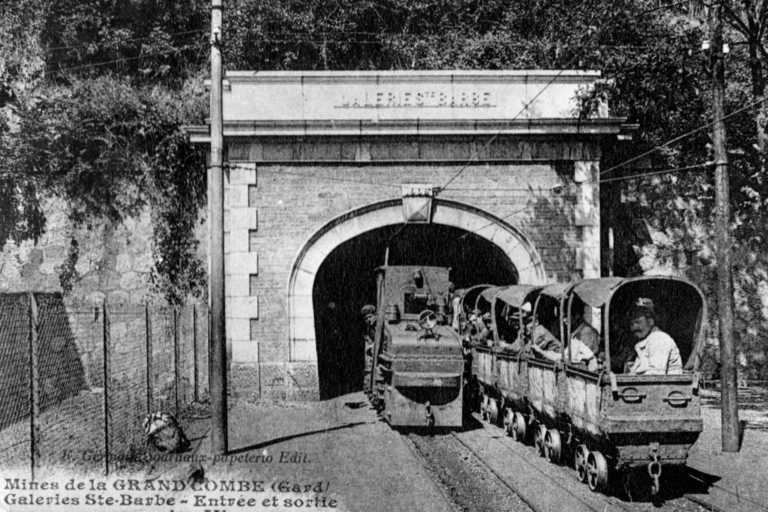
Discover the heritage and history of the La Grand’Combe mining basin, the life of the underground miner through testimonies, tools and objects, the Ricard spring, classified as a historic monument, and the drum of the extraction machine, also classified and unique in Europe.
The House of the Miner, located in the former mine shower building, provides an exceptional overview of the surface facilities of coal production in the Cévennes mining basin.

In the heart of the old village of Saint-Christol-lès-Alès, with its narrow streets, part of the old outbuildings of the town’s central castle, built in the 17th century from local stone, has been restored to perfectly serve as the setting for a complete collection about writing and everything related to it.

Maison Rouge
Camping Beau Rivage in Cardet is located 25 km from Saint-Jean-du-Gard, where this beautiful museum is situated. Maison Rouge – Musée des vallées cévenoles presents the traditional life in the Cévennes. Four main identity themes are highlighted: landscape construction, the chestnut tree, silk production, and Protestantism. A beautiful and impressive museum, definitely worth a visit.

Musée 1900
Amazing!
Because of the number and diversity of 3,500 authentic objects, displayed over more than 1,300 m² of exhibition space, set in a backdrop of old streets.
Educational!
Due to the historical, technical, and heritage significance of its collections, which testify to French craft and industrial production at the end of the 19th and beginning of the 20th century.
Unusual!
Because of the discovery of rare and exceptional machines, invented by our imaginative ancestors.
Fun!
By making old toys available for the little ones.
Through the reconstructed scenes that evoke daily life of that era.
Through the interactivity of videos and working machines.
In short, a visit to this enjoyable museum with the whole family is definitely recommended!